IMO Tightens LNG Leak Monitoring Certification
On July 21, 2026, the IMO issued circular MEPC.389(81) to urgently revise MARPOL Annex VI, bringing real-time LNG fuel tank leak monitoring systems into the scope of mandatory certification for certain newbuild vessels. For LNG containment suppliers, gas valve manufacturers, classification-linked laboratories, shipowners, and EPC contractors, the change matters because it shifts leak monitoring from a technical option into a formal compliance item that can affect export qualification, specification drafting, procurement alignment, and delivery preparation.
What the revision now requires
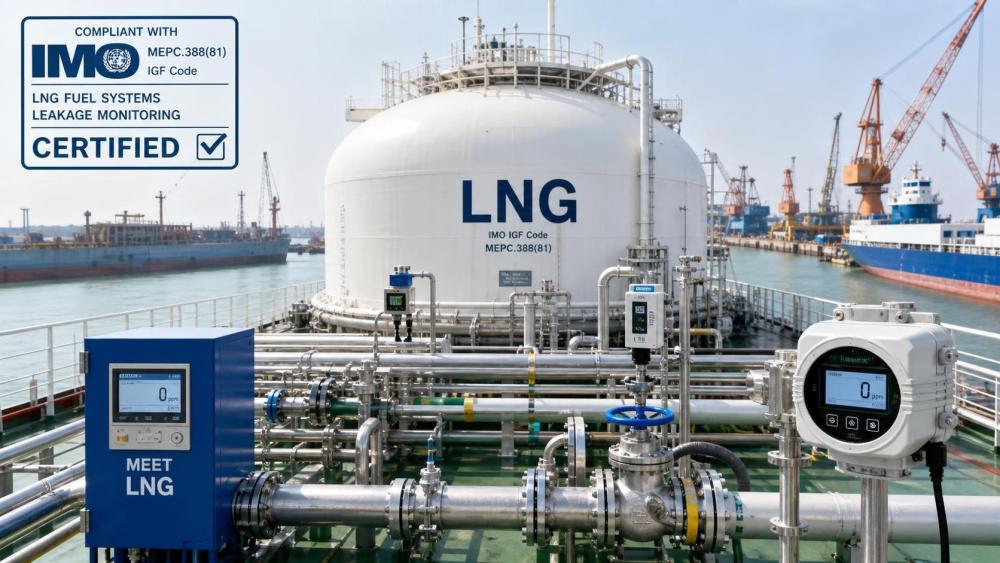
The confirmed change is that the IMO has, for the first time, placed LNG fuel tank real-time leak monitoring systems under a mandatory certification framework through an urgent revision to MARPOL Annex VI.
According to the provided event summary, the scope of the requirement includes double-wall pipeline sensors, cryogenic vapor dispersion modeling interfaces, and classification society type-approval procedures.
The requirement applies to 170k cbm LNG carriers and dual-fuel powered vessels with shipbuilding contracts signed after October 1, 2026.
The same summary states that the rule directly affects the export compliance path of Chinese LNG containment system suppliers, gas valve manufacturers, and laboratories working with classification societies. It also states that overseas shipowners and EPC contractors need to embed this certification clause in technical specifications in advance.
Where commercial and compliance pressure is likely to appear
Export-facing equipment suppliers will face a narrower compliance path
From an industry perspective, suppliers tied to LNG containment systems and gas valve assemblies may be affected because the monitored system is no longer only a design or safety discussion point; it now sits inside a mandatory certification boundary. The practical pressure is likely to appear in product qualification files, technical document completeness, and alignment with the type-approval route referenced in the event summary.
Specification drafting becomes an earlier control point
For overseas shipowners and EPC contractors, the impact is likely to concentrate at the specification stage. The provided information already indicates that the certification clause needs to be embedded in technical specifications in advance. That means bid documentation, technical clarification rounds, and supplier selection criteria may all need closer consistency with the new certification requirement.
Testing and classification-linked review work may become more central
For laboratories cooperating with classification societies, the rule matters because the summary explicitly connects the new requirement with type-approval procedures. Analysis shows that documentation interfaces, test support materials, and certification-related review steps may become more visible parts of project execution, especially where export delivery depends on formal acceptance of the monitoring system configuration.
What companies should check now
Review whether current technical files match the certification boundary
What deserves closer attention is whether existing technical packages already cover the monitoring elements named in the event summary, including sensors, cryogenic vapor dispersion modeling interfaces, and the relevant type-approval pathway. Where documents were prepared under earlier assumptions, the gap may first appear in compliance review rather than in manufacturing.
Check procurement and bid documents for clause alignment
Companies involved in shipbuilding, EPC execution, or export supply should closely review technical specifications, bid documents, and supporting compliance schedules. The immediate issue is not only product capability, but whether the certification requirement is clearly written into the purchasing and delivery chain early enough to avoid later redesign or document revision.
Track execution language from certification and regulatory channels
Observably, the current input confirms the rule change and its scope, but it does not provide detailed execution language beyond the mandatory certification requirement and affected system elements. Companies should therefore continue tracking how the requirement is described in formal compliance review, type-approval handling, and related technical submissions before treating any single market interpretation as settled practice.
Prepare for delivery and traceability questions in export projects
Analysis shows that export-oriented suppliers may need stronger control over test records, technical descriptions, certification correspondence, and version consistency across project documents. This is especially relevant where buyers, EPC contractors, and review bodies expect the monitoring system to be traceable as part of the vessel's certified configuration.
Why this looks more like an execution signal than a distant policy theme
Observably, this development is more than a general policy direction because it introduces a defined applicability date tied to shipbuilding contract signing after October 1, 2026, and identifies concrete system elements that now sit inside mandatory certification. At the same time, it is still more appropriate to understand this as a rule change that now requires close observation of implementation language, certification practice, and specification updates, rather than as a fully settled market outcome.
From an industry perspective, the key issue is not abstract regulatory tightening but the movement of a specific LNG monitoring function into a certifiable compliance gate. That is why suppliers, laboratories, buyers, and EPC teams will need to watch not only the rule text itself, but also how it is reflected in review workflows and commercial documents.
How this update is best understood at this stage
The immediate significance of this IMO revision is that LNG fuel tank leak monitoring has been elevated into a mandatory certification matter for the vessel categories and contract timing identified in the event summary. For the market, the practical meaning lies in earlier specification control, closer document discipline, and a more formal export compliance pathway for affected suppliers and service participants.
At this stage, it is more appropriate to understand the development as a landed compliance change with further execution details still worth monitoring. The rule direction is clear from the provided information, while the pace and exact form of market implementation will depend on how certification handling, technical specifications, and industry feedback evolve in practice.
Basis of this article and points that still need verification
This article is generated based on the user-provided news title, event date, and event summary. For this type of development, commonly relevant source categories may include official IMO notices, releases from regulatory bodies, information from trade or customs authorities, industry association updates, standards organization documents, and reporting by established industry media.
No specific official source link was provided in the input, so the exact official publication link still needs to be verified on an ongoing basis. Continued attention should also be paid to any later clarification on certification execution, interpretation by review bodies, changes in tender and specification language, industry feedback, and how affected companies implement the requirement in export and delivery workflows.
Related News
- How air lubrication changes container ship design and fuel savingsSep 15, 2026Marine Thermodynamics Expert
- When does a crane anti-sway retrofit improve container handling safety?Sep 14, 2026Terminal Kinematics Strategist
- What to verify before choosing a marine communication equipment supplier in NorwaySep 13, 2026Maritime Telemetry Fellow
- What drives marine engine retrofits cost on older vessels?Sep 12, 2026Marine Thermodynamics Expert
- How offshore structural engineering design manages fatigue in FPSO hullsSep 11, 2026Offshore Structural Scientist
- How to compare an automated guided vehicles manufacturer for port useSep 10, 2026Terminal Kinematics Strategist