
How is EEXI calculated for LNG carriers?
Calculating EEXI for LNG carriers requires more than comparing installed engine power with a regulatory limit. Technical evaluators must establish the vessel’s reference speed, capacity, propulsion and auxiliary power, fuel consumption, and fuel-specific CO₂ conversion factors under the applicable IMO methodology. For dual-fuel ships, the choice and documentation of fuel and engine data deserve particular attention.
The result is an estimate of a ship’s energy efficiency in grams of CO₂ per tonne-nautical mile. An existing LNG carrier complies when its attained EEXI, calculated from its technical characteristics, is no greater than its required EEXI. The challenge is making sure that both values are derived from the correct vessel data and regulatory provisions—not merely from figures that look plausible on a specification sheet.
What the EEXI calculation represents
The Energy Efficiency Existing Ship Index is a technical measure introduced under MARPOL Annex VI. It applies to ships within the relevant regulatory scope, including existing LNG carriers of 400 gross tonnage and above. Unlike the Carbon Intensity Indicator, or CII, EEXI is not calculated from a year of actual voyages. It describes the ship’s calculated efficiency at a defined reference condition.
In simplified terms:
Attained EEXI = calculated CO₂ emissions per hour ÷ transport work per hour
Transport work is represented by ship capacity multiplied by reference speed. The emissions side accounts for the relevant propulsion and auxiliary machinery, with fuel consumption converted into CO₂. Depending on the ship and the approved calculation method, correction factors, innovative energy-efficiency technologies and other adjustments may also be relevant.
The shorthand is useful for understanding the calculation, but it is not a substitute for the detailed IMO formula. LNG carriers can have steam turbines, diesel-electric or dual-fuel diesel-electric systems, low-speed dual-fuel engines, shaft generators and other arrangements. These configurations affect how power and fuel consumption are treated.
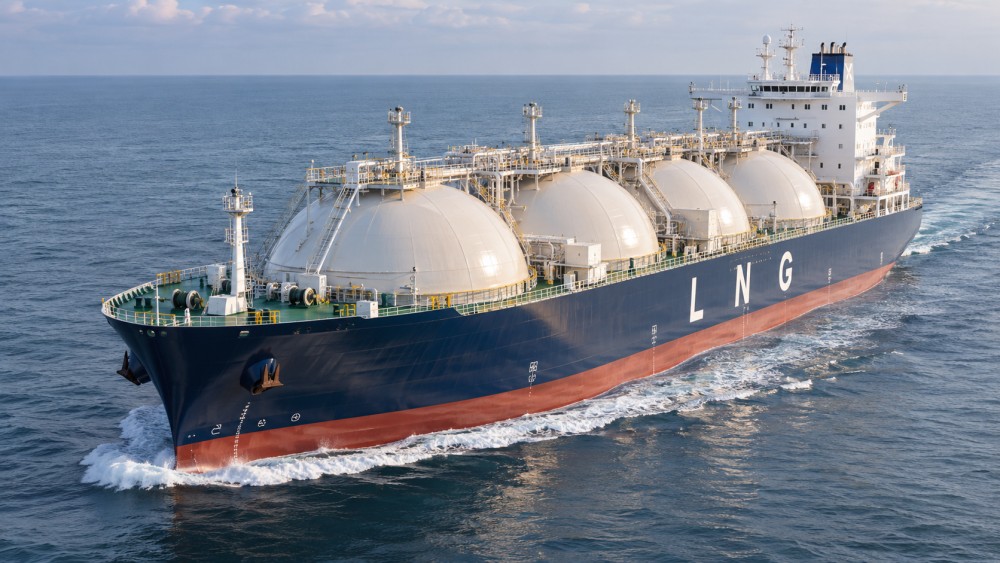
Inputs that determine EEXI for LNG carriers
A reliable calculation starts by defining the ship and its machinery configuration before collecting numbers. Evaluators should identify the applicable version of the IMO calculation and survey guidelines, as well as any flag-state or recognized-organization instructions relevant to the submission.
Capacity is not the cargo tank volume
LNG carriers are often described commercially by cargo capacity in cubic metres. That number is valuable for cargo planning, but it should not automatically be inserted into the EEXI equation. The applicable capacity parameter for the LNG carrier calculation is generally deadweight, expressed in tonnes, at the relevant reference condition.
Check the approved deadweight and loading documentation rather than converting tank volume into an assumed cargo mass. LNG density, loading limits, consumables and other weights make that shortcut unsuitable for a regulatory calculation.
Reference speed must match the evaluated power
Reference speed, usually written as Vref, is a central source of uncertainty for older vessels. It is the ship’s speed in knots under the conditions prescribed by the methodology, including the relevant draught and propulsion power. For many conventional arrangements, the reference power is linked to 75% of the main engine’s maximum continuous rating; different machinery configurations and power limitations require the applicable detailed treatment.
A sea-trial report may provide a starting point, but the trial condition is not necessarily the EEXI reference condition. Draught, displacement, environmental corrections and the power-speed relationship must be examined. Where original information is incomplete, the calculation may require an accepted alternative method and supporting evidence. An operating speed taken from a recent voyage is not, by itself, the regulatory reference speed.
How the calculation is assembled
The following sequence is a practical way to review an LNG carrier’s EEXI file. It separates the engineering inputs from the compliance comparison, making it easier to find the cause if a preliminary result changes.
- Define the vessel and applicable methodology. Confirm ship type, tonnage, deadweight, propulsion configuration and the applicable IMO provisions. Identify whether the vessel has an approved EEDI or other documentation that can be used under the EEXI rules.
- Establish propulsion and auxiliary power. Determine the power values required by the methodology, taking account of the machinery arrangement and any eligible, properly implemented engine or shaft power limitation.
- Determine reference speed. Use the accepted power-speed relationship and supporting trial or equivalent data at the required reference condition. Reassess the speed if the evaluated propulsion power changes.
- Calculate the emissions numerator. Apply the relevant power, specific fuel consumption and fuel-to-CO₂ conversion factors for propulsion and auxiliary machinery. Include any applicable adjustments or technology credits only as permitted and supported.
- Calculate the transport-work denominator. Multiply the applicable capacity by reference speed, applying relevant correction factors where the methodology permits or requires them.
- Compare attained and required EEXI. Use the applicable LNG carrier reference line and reduction factor to establish the required value. Document the calculation and supporting evidence for verification.
In a simplified single-fuel illustration, the numerator can be thought of as the sum of propulsion and auxiliary power multiplied by their respective specific fuel consumption and CO₂ conversion factors. If power is in kW, fuel consumption in g/kWh and the conversion factor in tonnes of CO₂ per tonne of fuel, the result can be expressed as grams of CO₂ per hour. Dividing by capacity in tonnes and speed in nautical miles per hour produces the familiar unit of g CO₂/t-nm.
That illustration deliberately omits machinery-specific provisions. It should not be used as a stand-alone compliance formula for a steam-turbine, diesel-electric or dual-fuel LNG carrier.
Dual-fuel engines: where the assumptions need scrutiny
Natural gas and liquid marine fuels have different carbon contents and therefore different IMO fuel-to-CO₂ conversion factors. A dual-fuel engine may also use liquid pilot fuel when operating on gas. The evaluator needs to establish which fuel mode and consumption data the applicable calculation rules require, then show how the corresponding conversion factors have been applied.
The key is consistency. A gas-mode specific fuel consumption figure should not be paired casually with a liquid-fuel conversion factor, and a single fuel consumption value should not be assumed to represent every engine load or operating mode. Manufacturer documentation, test reports and the relevant NOx technical file may be needed to substantiate the machinery data and their reference conditions.
For a diesel-electric LNG carrier, the propulsion system cannot be reviewed as though it were simply a mechanical-drive engine connected to a propeller. The calculation must follow the provisions applicable to the installed electrical generation and propulsion arrangement. Likewise, steam-turbine ships require attention to the methodology and available boiler and turbine data rather than an unsupported substitution of diesel-engine figures.
CO₂ is not the same as total greenhouse-gas impact. EEXI uses prescribed CO₂ conversion factors; it is not a comprehensive lifecycle assessment of LNG and does not, by itself, quantify methane slip or upstream emissions. Those issues matter for a broader decarbonization assessment, but they should not be confused with the attained EEXI result.
Comparing attained EEXI with the required value
The required EEXI is a regulatory threshold, not a measurement of the individual ship’s actual fuel burn. It is derived from the applicable ship-type reference line and reduction factor:
Required EEXI = reference-line value × (1 − reduction factor / 100)
The reference-line value is calculated using the vessel’s applicable capacity and the coefficients prescribed for its ship type. Evaluators should check the current applicable IMO and flag-state requirements rather than borrow a coefficient or reduction factor from a different vessel category. The calculation passes when:
Attained EEXI ≤ Required EEXI
A result just below the limit deserves careful review. Small changes in a speed estimate, documented power or fuel-consumption input can affect the margin. A calculation that passes on an early spreadsheet should not be treated as confirmed until the data and methodology have been accepted through the required verification process.
What happens if an LNG carrier does not meet the limit?
One possible compliance measure is an engine power limitation or shaft power limitation. Reducing available propulsion power can lower the emissions numerator, but it also changes the reference speed used in the denominator. The outcome therefore cannot be judged from the percentage power reduction alone.
For an LNG carrier, the technical review should also consider operational implications: attainable speed, schedule flexibility, weather margin and the procedures associated with an approved limitation. The limitation must be implemented and documented in accordance with the applicable rules; an informal instruction to operate at lower power is not the same as a verified technical measure.
Other modifications may be worth assessing, including improvements to propeller or hull performance and eligible energy-saving technologies. Their effect must be demonstrated using the applicable calculation and verification requirements. A projected reduction in voyage fuel consumption does not automatically translate into an allowable EEXI credit.
Documents to review before verification
A useful technical file connects every significant input to evidence. Depending on the vessel and calculation method, the review may involve:
- Approved ship particulars, deadweight and loading-condition information.
- Engine ratings, machinery arrangement drawings and applicable engine technical files.
- Specific fuel consumption data and evidence of the fuel modes used in the calculation.
- Sea-trial reports, model-test results or other accepted speed-power documentation.
- Details of any engine or shaft power limitation, including implementation and operating procedures.
- Evidence supporting correction factors or claimed energy-efficiency technologies.
- The EEXI technical file and calculations prepared for review by the flag administration or its recognized organization.
Verification is normally linked to the applicable International Air Pollution Prevention survey cycle, with compliance recorded through the relevant certification process. For a vessel already in service, the practical question is not only whether the initial calculation was accepted, but whether later machinery changes, power-limit arrangements or other relevant modifications require the file to be revisited.
EEXI is one part of the efficiency decision
A compliant EEXI tells an evaluator that the ship meets a prescribed technical threshold. It does not guarantee a strong CII rating, low fuel consumption on every route or the lowest lifecycle emissions. CII reflects operational performance over time, while EEXI is based on a defined technical reference condition.
For technical teams comparing LNG carriers or retrofit options, the most useful EEXI review is therefore traceable rather than merely numerical: identify the assumptions, follow each input back to its source, test the sensitivity of the result and understand what the compliance measure means for the vessel in service. That discipline makes the index more than a certificate requirement—it makes it a sounder basis for engineering decisions.
Related News
- How is EEXI calculated for LNG carriers?Nov 03, 2026Dr. Elias Vance
- Global Container Ship Fleet Tops 6,700 VesselsNov 03, 2026Naval Hydrodynamics Architect
- How to assess a deepwater production system supplier for FPSO integrationNov 02, 2026Offshore Structural Scientist
- MSC Reportedly Orders Three More 21,000 TEU Ships from Shanghai WaigaoqiaoNov 02, 2026Ms. Vivienne Cross
- How does fuel availability affect alternative fuel choices in shipping?Nov 01, 2026Dr. Elias Vance
- Panama Canal Revises Slot Allocation and Updates NetZero RequirementsNov 01, 2026Dr. Elias Vance