
Methanol Marine Propulsion Retrofit: Cost, Downtime, and Payback
Methanol marine propulsion retrofit: why the economics deserve a closer look
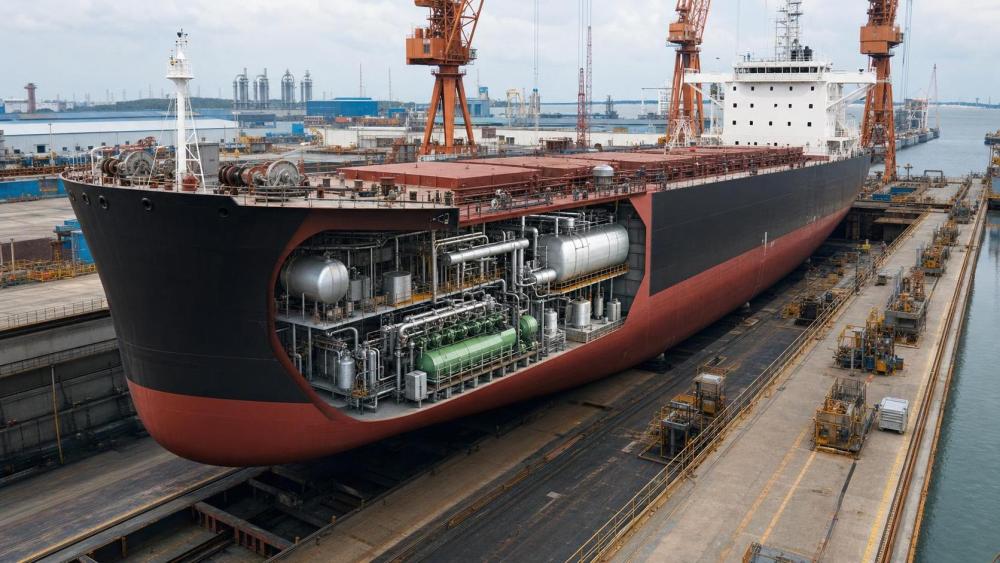
A methanol marine propulsion retrofit is rarely approved on emissions language alone.
The real question is whether the capital outlay protects earnings, compliance flexibility, and vessel competitiveness over the next trading cycle.
That is why cost, off-hire time, fuel access, and charter exposure matter as much as engine technology.
In practical terms, a methanol marine propulsion retrofit sits at the intersection of shipyard planning, propulsion engineering, and shipping economics.
MOES often frames these decisions in that broader way, linking compliance pressure with operating reality across vessels, offshore assets, and low-carbon transport systems.
So the better question is not whether methanol is interesting, but when retrofit economics become convincing enough to move.
What does a methanol marine propulsion retrofit usually include?
Many assume the retrofit is just an engine conversion. It is broader than that.
A typical methanol marine propulsion retrofit can involve dual-fuel engine modification, fuel supply and injection systems, storage tank changes, piping, ventilation, safety systems, control upgrades, and class approval.
For some ships, structural work is limited. For others, tank placement reshapes cargo or machinery space.
That difference has direct financial impact because space loss can matter more than hardware cost.
Retrofit scope also depends on engine age, maker pathway, remaining drydock schedule, and whether auxiliary systems need parallel modification.
When evaluating suppliers, it helps to split the package into three buckets:
- Core conversion equipment and integration engineering.
- Yard work, steel renewal, piping, commissioning, and testing.
- Indirect commercial effects such as lost cargo capacity, off-hire, and crew familiarization.
Without that breakdown, a methanol marine propulsion retrofit can look cheaper on paper than it will be in service.
How much does the conversion really cost once hidden items are counted?
There is no single market number, because vessel type and retrofit depth drive the range.
Still, the most common budgeting mistake is treating quoted equipment cost as total project cost.
A sound estimate should include engineering design, class review, procurement lead times, yard labor, steel work, controls integration, sea trials, insurance implications, and fuel system commissioning.
More importantly, it should assign value to operational disruption.
For a vessel with strong charter employment, four to eight weeks of downtime can materially shift payback.
The table below works as a quick screening tool before deeper FEED work begins.
In real approvals, the winning proposal is often the one with fewer schedule surprises, not the lowest headline capex.
Can downtime erase the value of a methanol marine propulsion retrofit?
Yes, especially when the vessel has healthy utilization and little drydock flexibility.
A methanol marine propulsion retrofit may look attractive in fuel and compliance terms, yet still underperform if installation timing is poor.
The more reliable approach is to model downtime as a commercial variable, not just a project scheduling note.
Questions worth testing include planned docking alignment, berth commitments, seasonal freight patterns, and whether a charterer will recognize lower-carbon tonnage with better terms.
Some operators reduce disruption by combining retrofit work with class renewal, ballast water upgrades, or energy efficiency modifications.
That bundling can improve total project logic, even if the shipyard invoice becomes larger.
Needless delay usually appears in four places:
- Long-lead fuel system components.
- Late-finalized tank arrangement decisions.
- Interface problems between engine maker and yard integrator.
- Crew training and commissioning sequences that were underestimated.
When these are priced early, the retrofit discussion becomes more realistic and easier to compare with LNG, biofuel-ready, or deferral options.
Where does payback usually come from: fuel savings, compliance, or charter value?
Payback rarely comes from one source alone.
For most vessels, a methanol marine propulsion retrofit works only when three value streams are considered together.
The first is regulatory resilience. Better emissions positioning can help with CII pressure, carbon cost exposure, and future trading access.
The second is fuel strategy. If methanol sourcing is credible on core routes, budgeting becomes less speculative.
The third is marketability. Some charters increasingly reward lower-emission profiles, even when the premium is indirect.
More cautious financial models use scenarios instead of one payback figure.
That is especially useful in sectors covered by MOES, where vessel earnings, compliance rules, and technical pathways shift faster than long-life asset planning would prefer.
A practical scenario set usually tests:
- High and low methanol price spreads versus conventional fuel.
- Different assumptions on carbon-related cost burden.
- Utilization shifts caused by downtime or route restrictions.
- Residual value effects at resale or refinancing stage.
If the project only works in one optimistic fuel-price case, the payback case is weak.
If it still works under mixed assumptions, the retrofit has strategic weight.
Which vessels are better candidates, and where do retrofit plans usually fail?
Not every ship is a good methanol conversion candidate.
The stronger cases tend to be younger vessels with meaningful remaining life, predictable route structure, and enough space to handle tank integration without severe commercial penalty.
Ships exposed to emissions-sensitive cargo owners or long-term decarbonization commitments may also justify earlier action.
Weaker cases usually show up when one of the following is ignored:
- The vessel has limited remaining economic life.
- Methanol bunkering is uncertain on actual trading routes.
- Cargo capacity loss offsets expected emissions benefit.
- The owner assumes future charter uplift without evidence.
- Approval planning starts before technical interfaces are mature.
This is where a comparison mindset helps more than a technology-first mindset.
A methanol marine propulsion retrofit should be tested against doing nothing, waiting for newbuild replacement, or selecting another fuel pathway.
That decision framework is usually more valuable than any single vendor promise.
A simple readiness check before moving to detailed quotations
So how should the decision be framed before capital is committed?
The strongest approval cases treat methanol conversion as a portfolio decision, not a single engineering event.
That means comparing vessel life, fuel access, compliance exposure, and charter logic in one model.
A methanol marine propulsion retrofit is easier to justify when the ship remains commercially relevant, downtime can be contained, and route fuel strategy is credible.
It becomes harder to justify when the project relies on optimistic fuel spreads or unpriced operational disruption.
The useful next step is not rushing to a final number.
Instead, build a short decision file covering retrofit scope, total installed cost, off-hire valuation, fuel availability by route, and three payback scenarios.
That approach gives a clearer basis for supplier comparison and internal approval, while keeping the methanol marine propulsion retrofit discussion grounded in measurable business outcomes.
Related News
- How air lubrication changes container ship design and fuel savingsSep 15, 2026Marine Thermodynamics Expert
- When does a crane anti-sway retrofit improve container handling safety?Sep 14, 2026Terminal Kinematics Strategist
- What to verify before choosing a marine communication equipment supplier in NorwaySep 13, 2026Maritime Telemetry Fellow
- What drives marine engine retrofits cost on older vessels?Sep 12, 2026Marine Thermodynamics Expert
- How offshore structural engineering design manages fatigue in FPSO hullsSep 11, 2026Offshore Structural Scientist
- How to compare an automated guided vehicles manufacturer for port useSep 10, 2026Terminal Kinematics Strategist