
IMO Adopts Revised BWMS Approval Standard
On July 27, 2026, the IMO adopted amendments to BWM.2/Circ.74 that revise the type approval rules for ballast water management systems, with mandatory implementation of the new BWMS standard set for October 2026. The update deserves close attention from exporters, equipment manufacturers, compliance teams, and buyers across the BWT & Exhaust Gas Scrubbers segment because it changes how export-oriented BWMS products will be certified, how long testing may take, and how compliance costs may develop for CE, MED, and USCG-related pathways, especially for Chinese manufacturers serving the EU, US, and Australian markets.
What the IMO revision formally changes
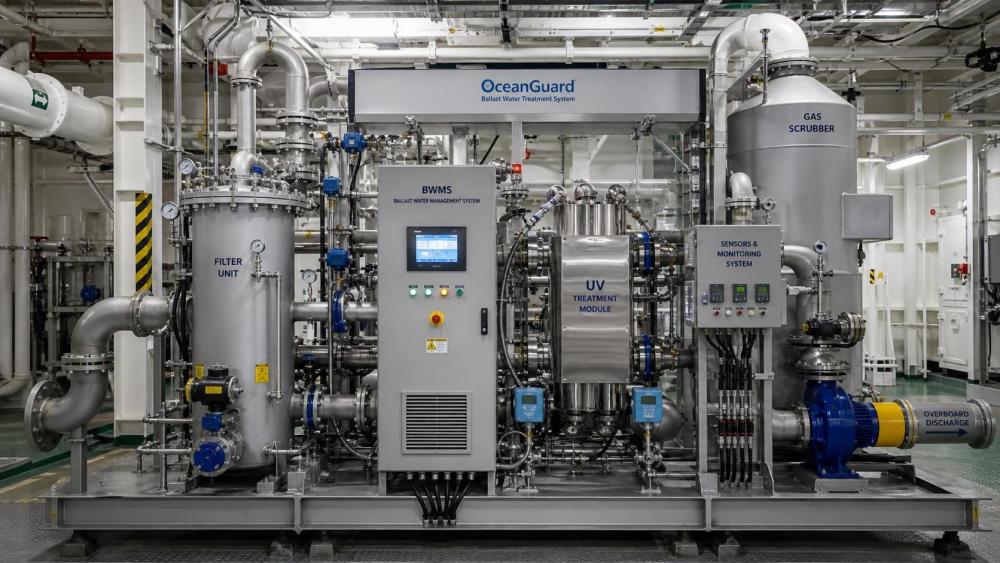
According to the provided information, the IMO passed BWM.2/Circ.74 on July 27, 2026 and comprehensively revised the type approval rules for ballast water management systems. The amended requirements add mandatory verification in three areas: residual chlorine monitoring for electrolysis-based systems, real-time dose feedback for UV systems, and AI-driven fault prediction modules.
The same information also confirms that the revised framework will become globally mandatory from October 2026. Its direct impact falls on the type certification route, testing cycle, and CE, MED, and USCG compliance costs for export-oriented BWMS equipment within the BWT & Exhaust Gas Scrubbers category.
Where the pressure is likely to appear first
Export-oriented equipment manufacturers face a narrower approval window
From an industry perspective, manufacturers of BWMS equipment for overseas markets are the most directly exposed because the rule change applies at the type approval stage. The practical impact is likely to center on product validation, test preparation, certification scheduling, and technical documentation tied to export market access.
Compliance and certification teams may see longer preparation cycles
For companies managing CE, MED, and USCG-related compliance work, the revision matters because the approval path is no longer limited to legacy test expectations. What deserves closer attention is how the newly required verification items may affect submission readiness, laboratory coordination, and the timing of certification milestones for products already positioned for export.
Overseas buyers and channel partners may tighten supplier screening
Procurement teams, distributors, and market-facing partners in the EU, US, and Australia may be affected through supplier qualification and delivery planning. The immediate concern is not only whether a system can be sold, but whether its approval basis, compliance records, and testing status remain aligned with the revised standard during transaction and delivery cycles.
Supply-chain service providers may need to adjust delivery assumptions
Service providers involved in export execution, project coordination, or after-sales support may also need to reassess schedules and customer commitments. Analysis shows that once approval pathways and testing cycles change, planning assumptions around lead times, acceptance documentation, and cross-border project handover can come under pressure even before any physical product change is visible.
What companies should watch now
Track how the new verification items are interpreted in practice
What deserves closer attention is the operational meaning of the new mandatory checks for residual chlorine monitoring, real-time UV dose feedback, and AI-driven fault prediction. The policy signal is clear from the provided information, but companies still need to distinguish between the headline requirement and the exact compliance work needed in certification files, test plans, and customer-facing technical claims.
Recheck product-market alignment by destination
For suppliers focused on the EU, US, and Australian markets, this update should be reviewed against each product's current export target and approval status. Analysis shows that the same product line may now face different commercial risks depending on whether it is awaiting certification, preparing renewal-related work, or being quoted into projects with fixed delivery expectations.
Prepare for cost and timing discussions with customers and partners
The provided information explicitly points to effects on testing cycles and compliance costs. Companies should therefore pay close attention to quotation validity, delivery windows, certification lead times, and supporting documents used in tenders or buyer communications. This is especially relevant where customers assume existing type approval arrangements will continue without adjustment.
Review supplier qualification and internal evidence chains
Manufacturers and integrators should also examine whether internal teams and external suppliers can support the new verification expectations with consistent technical records. Observably, once approval requirements become stricter, gaps often surface first in module traceability, test readiness, and the quality of compliance documentation rather than in headline product positioning.
Why this reads as more than a routine standards update
Analysis shows that this development is not simply a wording change in a technical circular. It signals that BWMS approval is moving toward more explicit validation of monitoring, feedback, and predictive functions that are tied to system operation and reliability. That matters because the affected requirements touch not only hardware configuration, but also how system performance is evidenced in regulated export markets.
It is more appropriate to understand this as an immediate market-access issue with longer-term standard-setting implications. The immediate effect comes from the October 2026 mandatory timeline and the stated impact on certification routes and compliance costs. The longer-term signal is that approval expectations may increasingly focus on verifiable operational control functions rather than baseline system claims alone. Even so, some practical implications still require continued observation because the provided information does not include detailed implementation guidance, test protocol wording, or regulator-by-regulator interpretation.
How this update is best understood today
At this stage, the IMO revision should be read as a confirmed compliance change with direct commercial relevance for export-oriented BWMS business, especially where products are aimed at the EU, US, and Australia. It does not by itself establish every downstream market outcome, but it clearly raises the technical entry threshold for affected manufacturers and shifts attention toward certification readiness, documentation discipline, and timing control. A neutral reading is that this is both a near-term operational issue and a broader regulatory signal that still merits close follow-up.
Basis of this article
This article is based on the user-provided news title, event date, and event summary concerning the IMO adoption of amendments to BWM.2/Circ.74 on July 27, 2026. Typical source types for developments of this kind may include official notices, standard organization documents, industry association updates, company disclosures, and reporting by authoritative trade media.
No specific official source link was provided in the input, so the exact source document trail should continue to be verified. Areas that still warrant follow-up include any later official wording, implementation details for the revised approval rules, and how compliance expectations are applied in actual export certification workflows.
Related News
- How air lubrication changes container ship design and fuel savingsSep 15, 2026Marine Thermodynamics Expert
- When does a crane anti-sway retrofit improve container handling safety?Sep 14, 2026Terminal Kinematics Strategist
- What to verify before choosing a marine communication equipment supplier in NorwaySep 13, 2026Maritime Telemetry Fellow
- What drives marine engine retrofits cost on older vessels?Sep 12, 2026Marine Thermodynamics Expert
- How offshore structural engineering design manages fatigue in FPSO hullsSep 11, 2026Offshore Structural Scientist
- How to compare an automated guided vehicles manufacturer for port useSep 10, 2026Terminal Kinematics Strategist