Choosing Port Communication Equipment
Choosing port communication equipment is rarely a single-device decision. It is a systems choice that affects vessel coordination, terminal safety, operational continuity, and the quality of every response when conditions change fast. For ports, offshore interfaces, and mixed cargo environments, marine communication equipment for ports has become part of the core infrastructure, not an optional upgrade.
The pressure is easy to understand. Traffic density is higher, automation is spreading, and stakeholders expect fewer delays with tighter compliance. In that setting, communication errors can ripple through berth planning, crane operations, pilotage, emergency handling, and maintenance windows. A well-designed system helps teams share the same picture, reduce hesitation, and keep decisions aligned across the port environment.
Why port communication systems now carry more weight
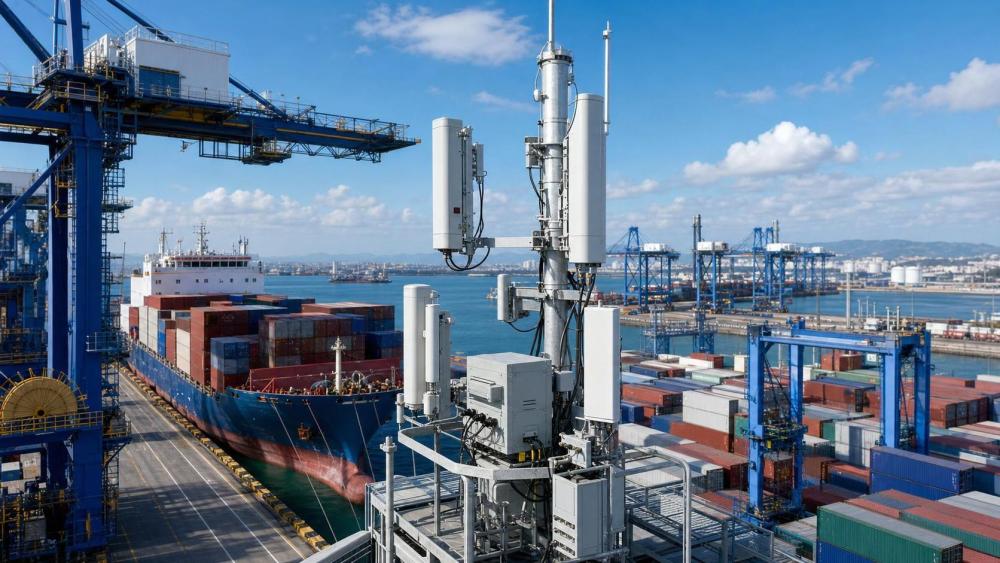
In many projects, communication used to sit behind power supply, civil works, and cargo handling equipment. That order has changed. Marine communication equipment for ports now supports daily coordination between shore, vessel, terminal, and control room functions, which makes it closely tied to uptime and incident prevention.
The shift is also strategic. Ports are being asked to handle larger vessels, faster turnaround, and more data-driven operations. At the same time, digital navigation, automated terminals, and offshore service links depend on stable voice, data, and alert transmission. When those layers work together, managers gain a clearer operational picture and fewer blind spots.
MOES tracks this trend because communication is connected to broader maritime performance topics: smart navigation, automated ports, terminal cranes, LEO satellite broadband, and compliance-driven infrastructure planning. In practice, the same project may need radio coverage, internal dispatch coordination, remote monitoring links, and resilient backup channels.
What marine communication equipment for ports usually includes
The term covers more than VHF radios. It can include port-wide intercoms, UHF systems, digital trunking, integrated PA and GA systems, AIS-linked coordination tools, networked alarms, and shore-side interfaces for vessel traffic services. Some facilities also combine these with satellite links, fiber backbones, and control-room dashboards.
That mix matters because no single technology fits every task. A quay crane operator, a harbor control center, and a maintenance crew do not need the same channel structure or coverage pattern. The best marine communication equipment for ports is the one that matches the operational map of the site, not the one with the longest feature list.
A useful way to read the equipment landscape is by function:
- real-time vessel and berth coordination;
- terminal internal dispatch and escalation;
- emergency alerts and public safety messaging;
- remote monitoring for offshore-linked operations;
- backup communication during outages or congestion.
The decision points that shape long-term value
Technical specifications matter, but they should be read in operational context. Coverage is important, yet coverage alone does not guarantee reliable communications across cranes, warehouses, jetties, and traffic channels. System architecture, interference resistance, redundancy, and integration capability usually decide whether a solution will perform well after installation.
For marine communication equipment for ports, four questions are especially useful. Can the system remain clear in noisy, metal-heavy environments? Can it keep working if one link fails? Can it connect with existing port operating systems and control-room tools? Can it support expansion as terminal capacity grows?
These questions are not abstract. A port that adds an automated crane line, a new berth, or a remote inspection workflow will quickly feel the limits of a weak design. The lowest upfront price often becomes the highest lifecycle cost when the system needs repeated patching, extra manual coordination, or early replacement.
Where the equipment delivers the clearest return
The value of marine communication equipment for ports becomes most visible in high-dependency operations. Berthing windows are shorter, vessel traffic is denser, and one missed instruction can create congestion. Reliable communication shortens reaction time and helps teams coordinate around real conditions instead of assumptions.
It also supports more complex port ecosystems. Containers, bulk cargo, offshore supply, and maintenance activity often share limited space and overlapping routes. In those environments, communication systems help separate routine instructions from critical warnings, which reduces noise and improves operational discipline.
For projects tied to smart port upgrades, the role is even broader. Communication hardware becomes part of a connected stack that may include automated guidance, remote diagnostics, and supervisory control. That is why MOES often treats marine communication equipment for ports as an enabling layer, not a standalone purchase.
How to narrow the choice without overbuying
A practical selection process starts with the operating map. Identify the zones that need uninterrupted coverage, the people who must communicate across them, and the events that require priority routing. This makes it easier to compare marine communication equipment for ports on real use cases rather than brochure language.
From there, it helps to test three investment questions. Is the system scalable enough for future expansion? Is it compatible with existing workflows and safety procedures? Is the vendor able to support commissioning, training, and long-term service in the region where the port operates?
The best option is usually the one that balances technical fit, maintainability, and operational continuity. In port projects, that balance is often more valuable than a highly specialized system that performs well only under ideal conditions.
A sensible way to move forward
Choosing port communication equipment is really about reducing uncertainty. The right marine communication equipment for ports can improve safety, keep operations synchronized, and support investment decisions that hold up over time. It also creates a cleaner base for automation, offshore connectivity, and future digital upgrades.
The next step is to compare site needs, risk points, and integration requirements before looking at product features. Once that framework is clear, it becomes much easier to judge which solution fits the port today and which one can still support the port after the next expansion cycle.
Related News
- How air lubrication changes container ship design and fuel savingsSep 15, 2026Marine Thermodynamics Expert
- When does a crane anti-sway retrofit improve container handling safety?Sep 14, 2026Terminal Kinematics Strategist
- What to verify before choosing a marine communication equipment supplier in NorwaySep 13, 2026Maritime Telemetry Fellow
- What drives marine engine retrofits cost on older vessels?Sep 12, 2026Marine Thermodynamics Expert
- How offshore structural engineering design manages fatigue in FPSO hullsSep 11, 2026Offshore Structural Scientist
- How to compare an automated guided vehicles manufacturer for port useSep 10, 2026Terminal Kinematics Strategist