
What determines cargo capacity on PCTC vessels?
Introduction: PCTC vessels cargo capacity is determined by much more than a vessel's published CEU rating or gross tonnage. The usable result depends on vehicle dimensions, deck configuration, ramp limits, stability, loading procedures, and route-specific constraints.
For researchers comparing car carriers, the most useful question is not simply how many vehicles a PCTC can carry. It is how many units of a specific cargo mix can be loaded safely, efficiently, and profitably.
A pure car and truck carrier, or PCTC, is designed around rolling cargo rather than container slots or deadweight alone. Its commercial capacity therefore changes materially between passenger cars, SUVs, electric vehicles, buses, construction machinery, and heavy trucks.
Shipowners, charterers, automotive exporters, and investors should treat stated capacity as a design benchmark rather than a guaranteed voyage outcome. Actual utilization is shaped by engineering limits and by the cargo profile available on each trade lane.
This article explains the practical factors behind PCTC vessels cargo capacity, how those factors interact, and what buyers should review when assessing vessel suitability, utilization risk, and transport economics.
Why CEU Is Only the Starting Point
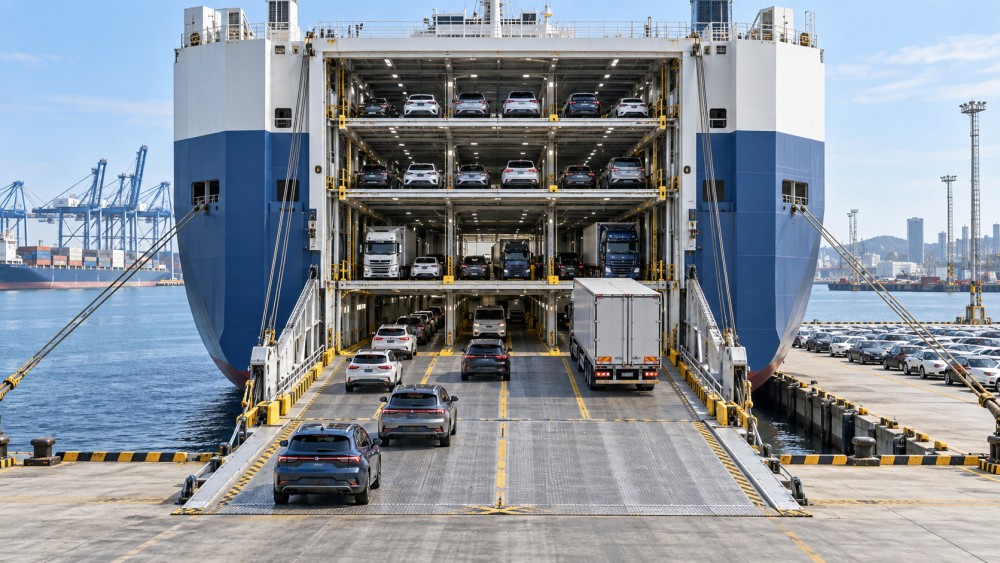
Most PCTCs are marketed using car equivalent units, commonly called CEU. One CEU represents the deck area assigned to a standard passenger car, but it does not describe every operational limitation.
A vessel rated at 7,000 CEU may carry close to that number when loading compact vehicles with compatible heights and weights. The same ship may carry substantially fewer units when the cargo includes SUVs, pickups, vans, or high-and-heavy equipment.
CEU capacity is useful because it gives the market a common comparison point. However, it can hide meaningful differences in usable deck square meters, ramp capability, adjustable decks, and the distribution of deck heights.
For cargo planners, the key distinction is between nominal capacity and voyage capacity. Nominal capacity is the shipyard or operator rating, while voyage capacity reflects the actual cargo booked, loading plan, and safety restrictions.
A prudent evaluation begins with the intended vehicle mix. A trade dominated by small passenger cars needs different deck geometry from a trade handling electric SUVs, agricultural machines, minibuses, and project cargo.
Deck Area, Deck Heights, and Internal Arrangement
Usable deck area is the physical foundation of cargo capacity. PCTCs contain multiple enclosed vehicle decks, but each deck has different clear height, structural rating, ventilation arrangements, and access conditions.
Low-clearance decks are highly efficient for sedans and hatchbacks. They become less useful when manufacturers shift production toward taller SUVs, crossovers, pickups, and battery-electric vehicles with larger overall dimensions.
Deck height is often a more important constraint than total square meters. A ship may have ample floor area, yet lose practical capacity because tall vehicles cannot enter several decks.
Many modern PCTCs use liftable or hoistable decks to improve flexibility. These decks can be raised to create additional vertical clearance for trucks or machinery, although that adjustment reduces available loading levels.
This tradeoff matters commercially. Creating room for high-and-heavy cargo can generate higher freight revenue per unit, but it may displace several passenger-car positions and lower total CEU utilization.
Internal pillars, fire zones, ventilation trunks, stair towers, and cargo-securing equipment also affect usable geometry. Their impact may appear modest in drawings but becomes significant when planners optimize thousands of vehicle positions.
Deck layout should therefore be reviewed through detailed capacity plans rather than headline specifications. Operators need to know which decks accept which heights, weights, vehicle categories, and hazardous cargo classifications.
Vehicle Size and the Cargo Mix Determine Real Output
The cargo mix is usually the largest variable in actual PCTC vessels cargo capacity. Vehicle length, width, height, ground clearance, weight, and turning radius all affect stowage density.
Compact cars can be parked closely and moved easily through narrow deck lanes. Large SUVs and pickup trucks consume more lane length, reduce turning efficiency, and may require wider clearance between units.
Height can cause an even larger loss of capacity. When vehicles exceed a deck's free height, planners must assign them to higher decks or raise movable decks, reducing the positions available elsewhere.
High-and-heavy cargo includes trucks, buses, trailers, excavators, forklifts, military vehicles, and industrial machinery. These units can produce premium revenue, but their operational requirements are more demanding than standard vehicle cargo.
Machinery may need special lashing points, protective dunnage, escort personnel, or separate loading sequences. Its axle loads can also restrict deck selection even when the overall unit weight remains within vessel deadweight limits.
Electric vehicles introduce another planning consideration. Their weight may be higher than equivalent combustion vehicles, and some operators impose specific battery-state, fire-safety, segregation, or monitoring procedures.
Freight forwarders should provide complete cargo dimensions and weights early in the booking process. Inaccurate cargo declarations can force late stowage-plan changes, delay terminal operations, and reduce the ship's usable capacity.
Ramp Capacity Controls What Can Reach Each Deck
Ramps connect the shore to the vessel and link internal decks. Their width, gradient, safe working load, turning arrangement, and clearance are critical determinants of accessible cargo capacity.
A PCTC can only use a deck for cargo that can physically reach it. Heavy trucks or oversized equipment may be limited to decks served by stronger ramps with sufficient headroom.
Ramp load limits are not simple vessel-wide figures. Concentrated axle loads, wheel spacing, vehicle speed, and dynamic effects during movement can matter more than a cargo unit's total declared weight.
Internal ramp geometry also affects loading speed. Tight turns, steep inclines, or low overhead clearances can slow drivers and increase the risk of contact damage to vehicles, deck structures, and ventilation equipment.
Stern ramp capacity is particularly important for high-and-heavy trades. A strong stern ramp expands the range of cargo a PCTC can accept, but terminal berth conditions may still limit actual use.
Some ports have tidal restrictions, ramp-angle limitations, berth load constraints, or insufficient marshalling space. A vessel's technical capability creates no commercial value if the loading terminal cannot support it.
When assessing a charter or newbuild design, planners should compare ramp specifications with the heaviest expected cargo and the infrastructure available across the intended port rotation.
Stability, Weight Distribution, and Draft Limits Set Safety Boundaries
Vehicle carriers have high sides, many decks, and relatively large windage areas. Maintaining intact stability and safe weight distribution is therefore central to determining achievable cargo intake.
Cargo loaded high in the ship raises the vertical center of gravity. Heavy units placed on upper decks can reduce stability margins, requiring planners to reposition cargo or leave some upper-deck space unused.
Weight distribution must also account for longitudinal strength. Concentrated heavy cargo in one section can create unacceptable shear forces or bending moments even when total deadweight remains below the design limit.
Ballast management helps maintain trim, stability, propeller immersion, and structural limits. However, ballast water occupies tank capacity and may affect draft, port restrictions, fuel consumption, and ballast water treatment operations.
Port draft is a practical restriction on many routes. A PCTC with available deck space may be unable to load additional heavy cargo if the resulting displacement exceeds the permitted arrival or departure draft.
Seasonal load-line conditions can also affect intake. Operators must consider the applicable load line, water density, weather conditions, and the limits imposed by ports, canals, rivers, or restricted terminals.
For this reason, a high CEU vessel is not automatically the best choice for dense cargo. The relevant calculation combines cubic space, deck strength, stability margins, and allowed draft.
Deck Strength and Lashing Requirements Limit Heavy Cargo
Deck strength defines the loads a deck can safely support. It is often expressed as a uniform load, but cargo planners must also consider point loads, axle loads, wheel loads, and local structural limits.
Passenger-car decks are optimized for light, distributed loads. Heavy machinery may require reinforced decks, designated stowage zones, load-spreading arrangements, or engineering approval before acceptance.
Lashing arrangements are equally important. Each vehicle must be secured against vessel motion, and heavy or irregular cargo may require additional lashing points, chains, turnbuckles, and certified securing plans.
Insufficient lashing capacity can reduce intake even where deck area remains available. The crew cannot safely accept cargo that lacks appropriate securing locations or requires arrangements outside approved procedures.
Weather exposure changes the calculation for cargo carried on open decks. Wind, spray, corrosion risk, solar exposure, and cargo sensitivity can make upper-deck positions unsuitable for particular machinery or finished vehicles.
Shipowners should ask for deck-strength plans, lashing manuals, and approved cargo-securing documentation. These records provide a more reliable view of high-and-heavy capability than a general marketing description.
Loading Efficiency Affects Commercial Capacity
Physical space is not the only constraint. Loading efficiency determines whether an operator can use that space within the available berth window, labor schedule, tidal period, and port-call budget.
Vehicle carriers depend on carefully sequenced stowage. Cargo destined for the first discharge port must remain accessible, while cargo for later ports should not block ramps, lanes, or vehicle movements.
Multi-port voyages reduce simple capacity assumptions. A ship may leave the first port nearly full, yet reserve certain deck zones to avoid costly reshuffling when cargo is discharged or loaded later.
Terminal layout matters as well. Limited vehicle-marshalling space, slow inspection procedures, customs holds, and insufficient drivers can interrupt the flow of rolling cargo to the ramp.
Damage prevention is another operational priority. Dense stowage improves capacity, but inadequate clearance can increase the probability of scratched panels, mirror damage, roof contact, and claims from cargo owners.
Digital stowage planning tools can improve decisions by combining vehicle data, deck geometry, strength limits, discharge sequence, and stability calculations. Their value is greatest on mixed-cargo and multi-port voyages.
Operational productivity should be assessed alongside cargo intake. A vessel that carries slightly fewer units but completes calls faster and more reliably may produce better annual earnings than a larger but slower alternative.
Regulations, Fire Safety, and Cargo Acceptance Policies
Regulatory and safety requirements can influence PCTC capacity directly or indirectly. The relevant framework includes SOLAS, the International Maritime Dangerous Goods Code, classification requirements, flag-state rules, and port regulations.
Fire safety has received particular attention following incidents involving vehicle carriers. Operators may impose stricter cargo acceptance rules, enhanced fire patrols, battery information requirements, and segregation procedures for certain vehicles.
Electric and hybrid vehicles are generally transportable, but policies vary by carrier and voyage. Battery condition, state of charge, damaged vehicles, recalled models, and documentation requirements may affect acceptance.
Dangerous goods, including vehicles carrying certain fuels or cargoes, may require designated locations and separation distances. These restrictions can reduce the number of positions available for ordinary vehicles.
Environmental compliance also affects commercial planning. Ballast water management, fuel selection, carbon-intensity performance, and port emissions rules may alter voyage cost, speed, and available operating flexibility.
Compliance professionals should separate technical capacity from permitted cargo capacity. The first reflects ship design, while the second reflects the cargo types and conditions the operator is willing and authorized to carry.
How to Compare PCTCs for a Route or Investment Decision
A useful comparison starts with the expected cargo portfolio rather than with vessel size alone. Estimate the annual share of passenger cars, SUVs, pickups, electric vehicles, trucks, buses, and high-and-heavy cargo.
Next, map that portfolio against deck heights, available square meters, ramp safe working loads, deck-strength zones, lashing capacity, and stability constraints. This produces a more realistic cargo-intake range.
Review the intended ports with equal rigor. Berth depth, ramp compatibility, terminal throughput, cargo-marshalling space, pilotage restrictions, and seasonal weather can all affect practical vessel deployment.
Investors should model revenue using several utilization scenarios. A high-case model based solely on rated CEU can overstate returns when the trade includes larger vehicles or recurring high-and-heavy cargo.
Operating cost must also be included. Fuel consumption, charter cost, port time, crew workload, emissions compliance, maintenance, and repositioning exposure influence the economics of each available capacity unit.
For newbuild projects, flexibility can be worth more than a marginal increase in nominal CEU. Adjustable decks, stronger ramps, improved fire protection, and efficient ventilation may protect earnings as vehicle designs evolve.
The strongest procurement decisions are based on a route-specific capacity model, backed by vessel plans and cargo data. General specifications are valuable, but they are insufficient for investment-grade evaluation.
Conclusion: Capacity Is a Managed Engineering and Commercial Outcome
PCTC vessels cargo capacity is best understood as a managed outcome, not a single specification. CEU rating provides a reference point, but usable capacity depends on physical design, cargo dimensions, safety, and operations.
Deck height and layout determine how many vehicles fit. Ramp strength and geometry determine where they can go. Stability, draft, deck loads, and lashing rules determine whether they can be carried safely.
For cargo planners, the decisive task is matching the vessel to the actual vehicle mix and port sequence. For shipowners and investors, the priority is measuring utilization and revenue under realistic operating conditions.
A PCTC with lower headline capacity may outperform a larger rival when its configuration fits the trade better. Flexible decks, efficient ramps, strong cargo systems, and reliable port turnaround can create lasting commercial advantage.
Before selecting, chartering, or valuing a vehicle carrier, review detailed deck plans, ramp limits, strength documentation, stability data, cargo policies, and terminal constraints. That evidence reveals the vessel's true earning capacity.
Related News
- What determines cargo capacity on PCTC vessels?Sep 26, 2026Naval Hydrodynamics Architect
- When turret mooring systems make sense for an FPSO in harsh watersSep 25, 2026Offshore Structural Scientist
- When do terminal automation solutions reduce container yard costs?Sep 24, 2026Ms. Vivienne Cross
- How Transpacific vessel weather routing reduces heavy-weather exposureSep 23, 2026Maritime Telemetry Fellow
- When does marine fuel transition investment pay back for shipowners?Sep 21, 2026Dr. Elias Vance
- When AI terminal operating systems improve container terminal throughputSep 20, 2026Terminal Kinematics Strategist