
Green Shipping Cost: What Drives Total Spend
Green Shipping Cost: What Drives Total Spend
Green shipping cost is shaped by far more than fuel alone. For financial decision-makers, total spend depends on vessel efficiency, propulsion choices, compliance exposure, port performance, and lifecycle maintenance. This article breaks down the cost drivers behind low-carbon maritime operations, helping you assess where investment improves efficiency, reduces regulatory risk, and delivers measurable long-term value.
For shipowners, port operators, EPC teams, and procurement leaders, the real question is not whether decarbonization costs money, but where each dollar goes and how quickly it returns. A smart budget must compare capex, opex, off-hire risk, and future compliance costs over a 5–15 year operating window.
1) The main cost stack behind green shipping
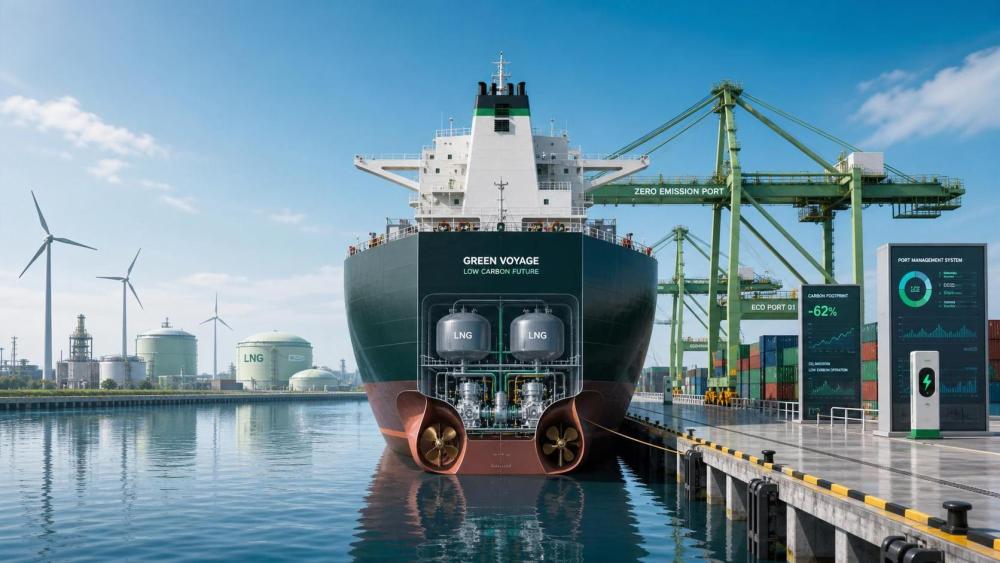
A green shipping budget usually combines four layers: vessel design, propulsion and fuel system, compliance and digital systems, and operational support. Each layer affects both initial spend and ongoing cash flow, so the lowest purchase price is rarely the lowest total cost.
In practice, financial approval teams should treat decarbonization as a lifecycle model. A retrofit may require 8–20 weeks of yard time, but it can reduce fuel burn, lower carbon exposure, and extend asset relevance under tighter IMO rules.
What usually drives the first bill
The first bill is often driven by engineering complexity. Hull optimization, engine modification, tank arrangement, control integration, and class approval all add cost. For newbuilds, design choices made early can avoid expensive redesigns later.
The table shows a core truth: green shipping cost is not a single line item. It is a collection of design, equipment, and operational decisions that should be reviewed together. A procurement team that compares only engine price may miss the bigger savings in fuel, downtime, and emissions exposure.
Why fuel is only part of the picture
Fuel remains the largest operating expense, but it is affected by speed profile, hull condition, weather routing, port waiting time, and maintenance discipline. A vessel that saves 5% on fuel through better routing can still overspend if it waits 18 hours at berth or sails with poor hull performance.
For financial controllers, the right question is not “How much does the fuel cost?” but “What system combination lowers total spend per voyage, per TEU, or per operating day?” That framing helps connect technical investment to measurable EBITDA protection.
2) Propulsion, fuel choice, and efficiency trade-offs
Propulsion strategy is one of the strongest drivers of green shipping cost. The gap between a conventional engine and a dual-fuel setup can be significant at purchase, yet the long-term outcome depends on fuel availability, charter profile, and emissions targets.
A practical evaluation should include fuel flexibility, maintenance burden, crew training, and asset resale value. For many fleets, the best solution is not the most advanced one, but the one that fits route density, cargo type, and compliance horizon.
Selecting the right propulsion concept
Alternative fuels such as LNG, methanol, and ammonia each carry different cost structures. LNG may reduce certain emissions today, while methanol offers a path to simpler bunkering in some ports. Ammonia may support deeper decarbonization, but it also raises safety, handling, and training costs.
The economic lesson is simple: a higher capex option can still be cheaper over the vessel life if it avoids repeated conversions, charter penalties, or carbon-related operating restrictions. Financial approval should therefore compare scenarios, not just equipment quotes.
3 factors to stress-test before approval
- Fuel price spread over a 3–5 year horizon.
- Expected carbon exposure under current and future rules.
- Maintenance intervals, spare parts, and crew readiness.
This stress test helps identify whether the green shipping cost is being driven by technology choice or by avoidable execution risk. In many cases, the largest savings come from balancing efficiency upgrades with realistic operating assumptions.
3) Compliance, port performance, and hidden operating costs
Compliance cost is often underestimated because it appears in many places: documentation, certification, emissions reporting, system calibration, and potential penalties. For ships trading globally, compliance with MARPOL Annex VI, CII reporting, and local port requirements can materially alter annual spend.
Port performance also matters. A 6-hour delay at berth can erase savings gained from weeks of efficiency work. Automated terminals, smarter slot planning, and better ETA coordination reduce both fuel waste and operational disruption.
For CFO-level review, the key is to separate visible and hidden costs. Visible costs include equipment and software. Hidden costs include training, data integration, audit effort, and off-hire time during installation or testing.
A practical compliance checklist
Before committing budget, teams should review at least 6 checkpoints: vessel class readiness, reporting workflow, emissions data quality, crew training, retrofit downtime, and certification lead time. These items often decide whether a project stays on budget.
The strongest projects reduce complexity rather than adding it. If a digital system cannot improve reporting accuracy within 2–4 weeks of deployment, or if a retrofit requires long manual workarounds, the total spend may rise even if headline emissions fall.
Where ports affect ROI
Port efficiency affects turnaround time, energy use, and schedule reliability. For container and bulk operations, faster crane cycles, better yard visibility, and improved berth planning can reduce queueing and support lower fuel burn at anchor.
That is why green shipping cost should be evaluated alongside terminal performance. A vessel upgrade may deliver only partial value if the surrounding port system cannot support the same operational rhythm.
4) How financial teams should evaluate total spend
Financial approval works best when it follows a structured process. Instead of comparing one-off quotations, teams should assess total spend across purchase, installation, training, operations, and end-of-life value. This is especially important for vessels with long trading lives and changing fuel regulations.
A useful model is to score each option against 4 criteria: capex, opex, compliance resilience, and operational flexibility. That structure keeps decisions disciplined and reduces the risk of overpaying for technology that does not fit the trading pattern.
A 5-step procurement approach
- Define the route, cargo, and emissions target.
- Estimate fuel savings and carbon exposure over 5–10 years.
- Compare retrofit time, crew impact, and spare parts support.
- Review class, safety, and port compatibility.
- Approve only after lifecycle cost and downtime are both modeled.
This process is especially useful for shipowners preparing for fleet-wide upgrades, because it makes capital allocation easier to defend. It also helps procurement teams align technical scope with finance expectations before tender release.
For exporters and suppliers, the same framework strengthens proposals. Instead of selling a component, you can show how it lowers voyage cost, improves compliance readiness, and supports long-term asset value. That is often what convinces financial approvers.
Common mistakes that inflate green shipping cost
Three mistakes appear repeatedly: buying for compliance only, ignoring downtime, and underestimating integration cost. Each can turn a promising project into an expensive one. The remedy is to validate technical fit, operating rhythm, and service support before signing.
Another frequent issue is neglecting maintenance planning. If a system saves fuel but requires frequent intervention, the savings may be eroded within 12 months. Finance teams should ask for maintenance intervals, warranty scope, and parts availability before approval.
Final takeaways for financial decision-makers
Green shipping cost is a lifecycle issue, not a fuel line item. The best investments are those that reduce total spend across energy, compliance, downtime, and maintenance while keeping the vessel commercially competitive.
If you are evaluating vessel upgrades, propulsion changes, terminal efficiency tools, or compliance systems, focus on 3 questions: what is the 5–10 year cost, where is the hidden risk, and how will the investment improve operational resilience?
For shipowners, ports, offshore operators, and procurement teams, that approach creates clearer approval cases and better long-term returns. If you want a more precise comparison of green shipping cost drivers for your fleet or project, contact us to request a tailored assessment and solution review.
Related News
- How air lubrication changes container ship design and fuel savingsSep 15, 2026Marine Thermodynamics Expert
- When does a crane anti-sway retrofit improve container handling safety?Sep 14, 2026Terminal Kinematics Strategist
- What to verify before choosing a marine communication equipment supplier in NorwaySep 13, 2026Maritime Telemetry Fellow
- What drives marine engine retrofits cost on older vessels?Sep 12, 2026Marine Thermodynamics Expert
- How offshore structural engineering design manages fatigue in FPSO hullsSep 11, 2026Offshore Structural Scientist
- How to compare an automated guided vehicles manufacturer for port useSep 10, 2026Terminal Kinematics Strategist