
Shipping Decarbonization Cost in 2026
Shipping decarbonization cost in 2026 is no longer a side topic in fleet planning. It now sits at the center of compliance, fuel strategy, and capital allocation decisions across shipping, ports, offshore operations, and marine equipment supply chains. For vessels trading under tighter emissions rules, the real question is not whether decarbonization will cost money, but which cost structure creates the most defensible return.
Why the cost question matters now
In 2026, shipping decarbonization cost is shaped by regulation, fuel volatility, and asset age. Carbon pricing pressure, CII performance, and charterer expectations are pushing operators to compare retrofit budgets against operating savings more carefully.
The issue is especially relevant for commercial vessels that sail on thin margins. A compliant solution can still fail financially if fuel availability, downtime, or maintenance intensity is underestimated.
That is why decarbonization is increasingly evaluated as a lifecycle cost problem, not just an emissions target. The numbers must work across capex, opex, asset utilization, and residual value.
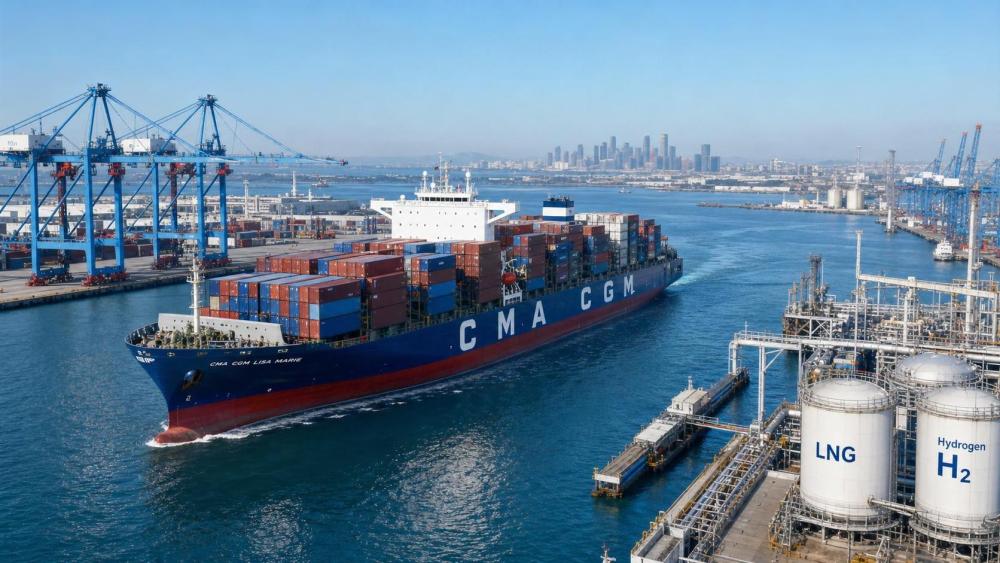
What actually drives shipping decarbonization cost
The first layer is propulsion choice. Dual-fuel engines, methanol-ready systems, ammonia pathways, and LNG-related solutions each bring different equipment, integration, and crew-training costs.
The second layer is vessel condition. Newbuilds can absorb efficiency design features more easily, while older ships often need retrofit work around tanks, piping, controls, and safety systems.
The third layer is operational disruption. Yard time, off-hire risk, and spare-parts complexity can reshape the true shipping decarbonization cost more than the equipment invoice itself.
A fourth factor is digital optimization. Hull cleaning schedules, weather routing, ECDIS integration, and voyage analytics may look modest individually, but they often create the fastest payback.
Common cost buckets
- Capex for engines, tanks, control systems, and safety upgrades.
- Fuel premium or sourcing cost for low-carbon alternatives.
- Retrofit downtime, class approval, and engineering redesign.
- Training, maintenance, and spare-part inventory expansion.
How different vessel types change the equation
Shipping decarbonization cost does not scale evenly across fleets. Mega container ships usually prioritize fuel efficiency and route optimization because voyage frequency magnifies savings.
Bulk carriers and tankers often focus on retrofit economics, since long service lives make incremental efficiency gains meaningful. LNG carriers may compare boil-off management, auxiliary efficiency, and future fuel pathways.
For offshore assets such as FPSOs or semi-submersible platforms, the challenge is different. Power demand, dynamic positioning, and harsh-environment reliability often matter more than headline fuel price alone.
In practice, the best decision usually depends on trading pattern, charter duration, and expected compliance exposure. A solution that works for one route may be poor economics on another.
Technology paths and their trade-offs
The market is no longer choosing between “do nothing” and “go green.” It is choosing between several cost stacks with different maturity levels and risk profiles.
Methanol propulsion is attractive because of retrofit potential and simpler handling than ammonia, but fuel economics remain sensitive to supply and pricing. Ammonia offers stronger long-term emissions potential, yet safety and infrastructure costs are still demanding.
Air lubrication, hull optimization, and bulbous bow refinement usually sit in the lower-cost efficiency tier. These measures rarely solve every compliance issue, but they often lower the baseline shipping decarbonization cost of a broader strategy.
Terminal-side systems also matter. Automated RMG cranes, intelligent guided vehicles, and terminal operating systems improve throughput and reduce idle time, which indirectly supports lower emissions across the logistics chain.
How business teams should evaluate the numbers
A useful assessment starts by separating compliance cost from transformation value. Not every expense should be treated as a burden; some items reduce fuel burn, extend asset life, or improve charter competitiveness.
For this reason, shipping decarbonization cost should be reviewed across three horizons: immediate compliance, medium-term operating efficiency, and long-term asset positioning. That view makes it easier to compare options that look expensive today but protect revenue later.
This is where maritime intelligence platforms such as MOES become useful. They help connect propulsion thermodynamics, hull performance, port automation, IMO compliance, and supply-chain economics in one working frame.
Instead of treating each project in isolation, decision-makers can compare engineering feasibility, vendor maturity, and lifecycle ROI side by side.
Practical signals before committing budget
There are a few signals that usually indicate whether a project is worth pursuing now or delayed for a later cycle.
- Fuel savings are measurable on the actual route profile, not just in design assumptions.
- The vessel has enough remaining service life to recover retrofit investment.
- Class approval, safety case, and infrastructure readiness are already visible.
- The option improves both emissions performance and commercial flexibility.
Where these signals are weak, a phased approach is usually safer. Low-cost efficiency measures can buy time while fuel supply chains and technology standards mature.
A workable next step
The best response to shipping decarbonization cost in 2026 is not a universal formula. It is a structured comparison of vessel profile, route exposure, technology readiness, and total lifecycle economics.
A strong plan usually begins with baseline fuel data, then tests a small set of efficiency and retrofit scenarios before moving to larger fuel-transition commitments. That keeps the budget grounded while preserving strategic optionality.
For organizations reviewing fleet, terminal, or offshore investment decisions, the most useful next move is to define a cost model that includes compliance, downtime, fuel access, and residual value together. Once those variables are in one view, shipping decarbonization cost becomes much easier to judge with confidence.
- commercial vessels
- port automation
- container ships
- LNG carriers
- bulk carriers
- semi-submersible platforms
- methanol propulsion
- RMG cranes
- intelligent guided vehicles
- terminal operating systems
- ECDIS
- weather routing
- hull optimization
- IMO compliance
- CII
- tankers
- dual-fuel engines
- shipping decarbonization
- shipping decarbonization cost
Related News
- How air lubrication changes container ship design and fuel savingsSep 15, 2026Marine Thermodynamics Expert
- When does a crane anti-sway retrofit improve container handling safety?Sep 14, 2026Terminal Kinematics Strategist
- What to verify before choosing a marine communication equipment supplier in NorwaySep 13, 2026Maritime Telemetry Fellow
- What drives marine engine retrofits cost on older vessels?Sep 12, 2026Marine Thermodynamics Expert
- How offshore structural engineering design manages fatigue in FPSO hullsSep 11, 2026Offshore Structural Scientist
- How to compare an automated guided vehicles manufacturer for port useSep 10, 2026Terminal Kinematics Strategist